
20 lessons for leading in the 21st century
Last week, I wrote a lot about Dr. Martin Luther King Jr.’s dream, the work of Indigenous Canadian folk musician Willie Dunn, and the centuries-old democratic decision-making processes of Dunn’s people, the Mi’kmaq Nation of eastern Canada. This week I’m digging into a dream of my own, a dream about establishing equally effective democratic governance here at home.
Yes, I know, I know. We are most definitely living through rather difficult times—an era in which autocracy often appears to be on the rise, a time where it would be easy to grow discouraged and disengaged. But instead of getting down, I’ve just grown more determined. The democratic dreams keep coming up. And in the words of 20th-century American historian and sociologist Lewis Mumford, “Creativity begins in the unconscious; and its first human manifestation is the dream.”
In the hardscrabble ways of the “real world,” dreaming is easily dismissed as sappy at best, or irrelevant at worst. But dreams can be the inspirational and insightful seeds for more concrete visions. If Dr. King had not dreamed aloud, where would we be today?
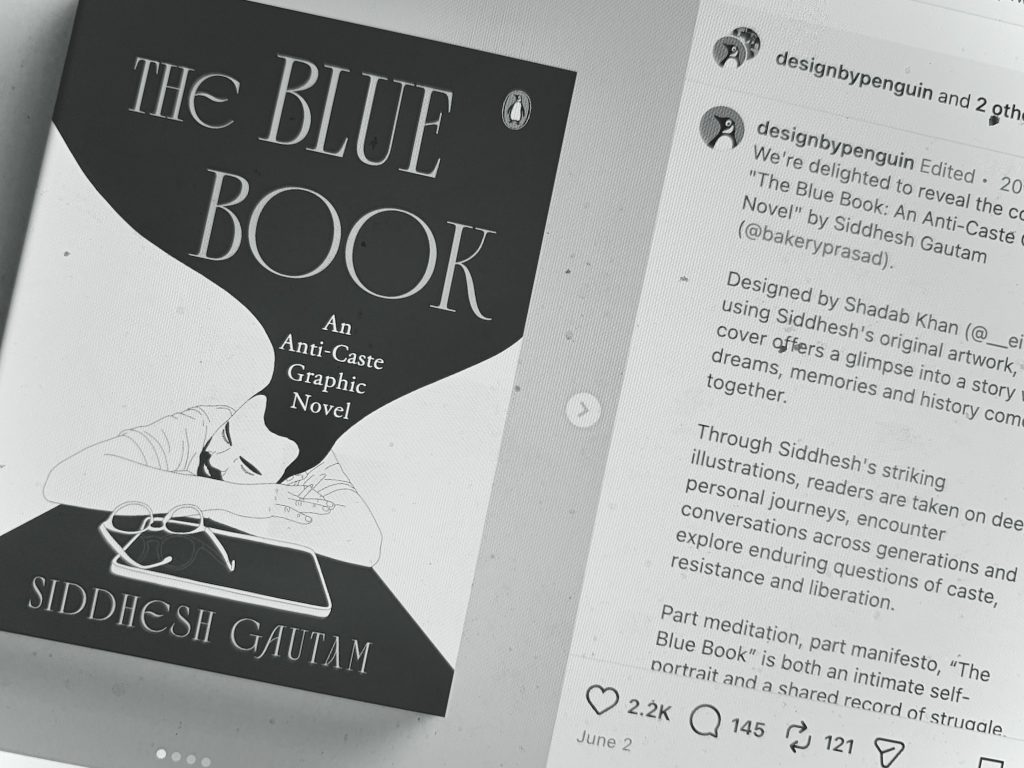
I know I’m not alone with this sort of dream-work. Writing in STIRworld this past summer, storyteller Srishti Ojha says that the insightful Indian illustrator and author Siddhesh Gautam’s newly released volume, The Blue Book: An Anti-Caste Graphic Novel, is about “dreaming equality and solidarity.” In the book, Gautam shares,
Dreams have always been an important part of my life. … Dreams have shaped my curiosities and have chiseled the clay out of me slowly, unevenly, sometimes gently and sometimes with force. I have always been a dreamer, but not in the romantic sense alone. Dreaming, for me, has been a way of building a self of questioning what is given, and of imagining what could be otherwise.
Gautam’s wise words are an apt description of the democratic dreams I’ve been having in recent months. And while I know that dreams are usually associated with being asleep, the kind of dreams I’m talking about here are of the sort that wake me up. They leave me alert, energized, eager to get to work! Over the years, I’ve been taking to heart what Japanese science fiction writer Tsutsui Yasutaka says in his 1993 novel Paprika: “It’s better to dream a lot, actually. It’s good for the brain. Interesting people have interesting dreams.”
Mahatma Gandhi could well have been one of the people Yasutaka was writing about. In 1947, Gandhi shared his hopes for a democratic, non-denominational, and highly inclusive nation in the book India of My Dreams, writing:
I shall work for an India in which the poorest shall feel that it is their country, in whose making they have an effective voice, an India in which there shall be no high class and low class of people; an India in which all communities shall live in perfect harmony. There can be no room in such an India for the curse of untouchability . . . This is the India of my dreams.
Dreams, it seems, can, and often do, make a significant difference. They help me push past the problems that dominate the headlines. Even when the news is not uplifting, I’m determined not to get discouraged. In fact, I’m in alignment with my friend Anand Patwardhan, the amazing Indian documentary filmmaker, who, encouraged in part by the current momentum of the Cockroach movement in his homeland, wrote to me last week that “hope is in the air and fear is taking a back seat.” And I’m also in full agreement with Anand’s powerful and succinct statement: “It is the duty of all thinking citizens to speak out before it becomes too late.”
My hope here is to do just what Anand has advised. To acknowledge the challenges at hand, and then make the choice to speak out in constructive and caring ways. In particular, my focus is on the dream I’ve been having in recent months, a waking dream about doing the work to develop creative and caring democratic constructs. Big dreams like this are, I know, rarely easy to implement, but when we work together, they can make a real difference.
In The Blue Book, Siddhesh Gautam describes “dreams that belong somewhere between memory and imagination. Between history and longing. Between what has been lived and what could have been lived.” Which is, I’ll add, also an aptly poetic description of what’s been in my mind about democracy.
Can we work to help make positive change a reality? Absolutely. That’s the point of this piece. As Yoko Ono wrote in her 1964 book, Grapefruit, “When we are dreaming alone it is only a dream. When we are dreaming with others, it is the beginning of reality.”
Consider, for a couple of minutes, Canadian history. The first formal elections in the country were held in 1867, the year in which Canada became a modern nation-state. Originally, only property-owning European males were allowed to vote. Nine years later, in 1876, the Indian Act allowed Indigenous people like Willie Dunn’s ancestors to vote, BUT only if they gave up their Indian status. Understandably, very few acted on the “opportunity.” After all, they belonged to nations that had existed for millennia, far longer than any newly created European construct. It took nearly a century before Indigenous Canadians were really granted the right to vote, and only in 1982, the same year we opened the Deli, did the Canadian Charter of Rights and Freedoms declare that all Canadian citizens could vote.
Anand Patwardhan says, “Filmmakers are thinking citizens who cannot look away.” Along those same lines, I would suggest that dreamers—at least those who are actively engaged with the world—are thinking citizens who are hard pressed not to take action on the positive futures they have imagined.
Siddhesh Gautam is one of those thinking citizens. His inspiring life story is itself evidence that long-standing injustices can be pushed in more democratic directions. Born into a Dalit family, part of the communities in India long subjected to caste-based discrimination, he has gone on to study and speak across South Asia, the U.S., the U.K., and Europe. He has also turned his illustrations, which reach a wide audience on Instagram (@bakeryprasad), into an entry point to the pain and possibilities of Indian history, one that can deepen the understanding of novices like me. The Blue Book is Gautam’s latest effort to explore his dreams, dreams of doing more to help Dalit people and create a more meaningfully democratic society in his homeland.
Gautam describes himself to STIRworld as a “multi-disciplinary, mixed media artist, designer, writer, researcher, treasure hunter, fallen angel, soul searcher, and Ambedkarite.” The last term is a reference to one of Gautam’s heroes, B.R. Ambedkar, whom he illustrates often in The Blue Book. Over the course of his many years in public life, Ambedkar succeeded in challenging the unhealthy status quo through the legal and economic fields. Gautam, too, challenges the caste system, but, in his case, through his art.
As is true for many people from excluded groups, Gautam was struck as much by what he did not see in India’s art world as by what was regularly displayed. In an essay titled “The Dangerous Binary of Art and Craft,” he says of his formal art studies:
I did not see the people. My people … I realized very early that art wasn’t just about what was made. It was about who got to be called an artist.
B.R. Ambedkar experienced that sort of exclusion firsthand. One of the great leadership figures of 20th-century India, he was born a Dalit but, like Gautam, broke the mainstream’s long-imposed mold. He made a way forward for himself, despite the many undemocratic social barriers placed in his path. As Anand Patwardhan writes, Ambedkar “came from a caste denied the right to education but rose to become the best-read and greatest intellectual of modern India.” Ambedkar studied first in India, then at Columbia in New York City, and then at the London School of Economics. He went on to devote his life to lifting up the Dalits and tearing down the centuries-old social walls built to hold them back.
Prime Minister Jawaharlal Nehru called Ambedkar a “symbol of revolt against all oppressive features of Hindu society.” One of the most significant symbols of that revolt took place seventy years ago this past week, on October 14, 1956, when Ambedkar converted from Hinduism to Buddhism, part of his commitment to moving past the ancient caste system. Ambedkar’s grandson, Prakash Ambedkar, wrote last week that his grandfather’s decision was a bold “reclamation of dignity and equality, and a decisive step towards liberation from caste oppression. … A defiant declaration that the caste-oppressed would no longer submit.” Very active in the Indian independence movement and the writing of the Indian constitution, Ambedkar died two months later, on December 6th of that year. He was 65.
Anand Patwardhan, who’s been called “the Michael Moore of India,” is a wonderful, insightful, kind, funny, creative, and courageous filmmaker. As a student, Anand had spent significant time studying here in the States, where, among other things, he listened to the same Bob Dylan tunes I wrote about two weeks ago. Songs like “Blowin’ in the Wind,” “Masters of War,” “With God on Our Side,” “Times They Are A-Changin’,” “Oxford Town,” and “Only A Pawn in Their Game.” As he says, “I grew up with these songs. We sang them at protest rallies when I was a student in America fighting against the Vietnam War.”
I met Anand in 2022, when he was a visiting scholar at the Center for South Asian Studies here in Ann Arbor. It was during his time on campus that I watched Anand’s award-winning 2011 documentary Jai Bhim Comrade, a documentary that detailed the killings of Dalit citizens 14 years earlier at the Ramabai Ambedkar Nagar colony in Mumbai, which started when a statue of Ambedkar was desecrated. Siddhesh Gautam praised the film, writing that it “brought Ambedkarite struggles to cinema.”
If democracy is built on active, engaged citizenship, then, to my eye, Anand Patwardhan seems a model citizen. Rather than stand back and support the status quo, he has regularly and repeatedly opted to speak up, stand out, and make films that express a distinctive point of view. He is, as he says, “a non-serious person forced by circumstance to make serious films.”
While art in the form of Anand’s films might, to many, seem extraneous, I’ll argue that it’s anything but—we need more beauty, better questions, and a lot more truth in the world. As I shared last week, history professor Charles McKinney, author of From Rights to Lives, pointed out at the Southern Foodways Symposium the weekend before last, Europeans skipped over big parts of history. “Those stories,” McKinney says, “are concealed.” Art, like Siddhesh Gautam’s new The Blue Book and Anand Patwardhan’s films, is one of the easiest ways I know to bring what has been hidden into the light of a more democratic day.
In fact, Gautam reminds me that “Movements don’t move without art.” Art can be, in his case, creating a graphic novel. It can be a documentary like one of Anand Patwardhan’s. But it can also be the design and creation of a democratically oriented organization. As Gautam says, “Making art in a world that denies your right to beauty is not just resistance—it is reclamation.” And he adds,
I believe art’s role in society is to document the present, reflect upon the past and conceptualise the future … Art is a tool and weapon for self-expression first.
My dream, as I’ve shared here, is about (always, of course, imperfectly) conceptualizing—and actualizing—democratic constructs at every level. Yes, with Election Day just around the corner, that includes nations. But mostly, I’m thinking smaller. We can begin by building democratic forms today or tomorrow in our own businesses, schools, and places of worship. Gautam gets it right, I believe, when he writes, “Progress must be built from the bottom up.”
As I wrote in the “Why Democracy Matters” pamphlet, for nearly two years now I’ve been carrying Timothy Snyder’s small book On Tyranny: Twenty Lessons from the Twentieth Century, with me everywhere I go. On Tyranny, as I have told anyone who is interested, is essential reading for anyone who advocates freedom, democratic activity, and a deep belief in human dignity. As Snyder’s website says, “On Tyranny is a call to arms and a guide to resistance.”
Riffing a bit on what was written about Tim Snyder’s superb book, we could, I suppose, see the work at hand as “a call to action and a guide to rebuilding.” Instead of focusing on what to do to keep autocracy at bay, what follows is about building democratically-inclined organizations. As B.R. Ambedkar advises:
My definition of democracy is “a form and a method of government whereby revolutionary changes in the economic and social life of the people are brought about without bloodshed.” … That is the real test.
With that in mind, here are 20 beliefs that I’ve arrived at as part of my dive into Deep Understanding over the course of the last couple years:
- Democracy is not about politics. It’s about people. And principles. Democracy, as I’ve come to see it, is not only about who’s in office, or who we vote for in the next round of elections. Voting matters, especially with election day only a couple weeks away, but it is only one entry point into an entire ecosystem of engagement. The dream, if I’m really going to put myself out there, is far bigger than a voting booth. Democracy, as I’ve come to see it, is a way of working together collaboratively that’s guided by ethics: dignity, compassion, communication, generosity, and an abundance of empathy. In that sense, this piece might be considered apolitical. Democratic constructs are not about irresolvable conflict, but rather collaboration. They’re not about “winning,” but instead, about working together. Democratic approaches are not about keeping others down, but about creating something together that none of us could accomplish on our own. It’s about believing that we can learn, grow, and do better—and that all of this is far more likely to happen when we do it together.
- Democracy is a bottom-up activity. Per Siddhesh Gautam’s writing, this is work that is best begun on the “ground floor.” For a democratic construct to work, in any setting, it has to be built on meaningful engagement of the many. As Mahatma Gandhi makes clear, “true democracy cannot be worked by twenty men sitting at the center. It has to be worked from below, by the people of every village.”
- Democracy is about each of us taking 100% responsibility for the collectives of which we’re a part. Writer and radical thinker Peter Block says, “Accountability is the willingness to care for the whole.” Building on that belief, accountability asks us to embrace our role as active members of something much greater than ourselves and to willingly take responsibility for all of it—including the elements we would prefer not to engage with. However frustrated we may feel on any given day, the ecosystem we are a part of is ours to make, unmake, or remake.
- Democracy is about engaging diversity and active inclusion. Given that no two people think exactly the same way, it is clear that the more people we involve in any project, the richer our conversations—and the more effective our conclusions—are likely to be. One cannot truly have democracy without diversity. I like what writer Rebecca Solnit says: “This is what we mean by democracy: that everyone has a voice, that no one gets away with things just because of their wealth, power, race, or gender.”
- Democracy demands effective conversation. Practicing democracy must include near-constant conversation to come to creative and caring agreement on what will be best. It fits with the comment of Students for a Democratic Society back in the ’60s: “Democracy is an endless meeting.” We’ve certainly had plenty of those over the years here in the Zingerman’s Community of Businesses (ZCoB). But a well-run meeting is a magical tool to help bring people together and improve the effectiveness of all we do. As the insightful and witty Michigan filmmaker Michael Moore (aka, “the Anand Patwardhan of the U.S.”) says in his usual and wonderful down-to-earth, anarchistic way, “I think things work better when the people who have to work with whatever it is we’re working with have a say in how it’s working.”
- Democracy allows us to say “No.” Conflict can, in fact, take place in caring and constructive ways. As my long-time business partner Paul Saginaw taught me years ago, it’s possible to disagree without being disagreeable—or being summarily removed from the organization, whether that organization is a company, a family, or a country. As Peter Block says, “If we cannot say no, then yes loses its meaning, and commitment also is taken off the table.” Does this sort of disagreement lead to frustration? For sure. I, for one, am often frustrated. But dealing with disagreement is the price I freely choose to pay to pick up the benefits that accrue from working in this way. As Gandhi says, “Evolution of democracy is not possible if we are not prepared to hear the other side.” Saying no in this context, though, isn’t about slamming doors shut; it’s merely the entrée to the next conversation.
- A democratic workplace requires its members to work hard to make it work. Mahatma Gandhi says that “Democracy is not a state in which people act like sheep.” Teaching, and then practicing at a small scale, is work that a healthy democracy would be wise to commit to—without it, we are blowing in the winds of the world. As B.R. Ambedkar wrote, “Democracy is not merely a form of government. It is primarily a mode of associated living.” Democratic constructs don’t often come alive in mainstream classrooms (though there are, to be clear, democratically run classrooms) nor in most companies, but we don’t need to let the lack of good examples prevent us from pushing forward. We have the power to create them ourselves. As Siddhesh Gautam reminds us, “Intellect is not locked in libraries … it is in encountering, in experiencing.”
- Democracy depends on checks and balances. Any kind of construct that wants to lean into positive democratic practices will want to design meaningful checks and balances. Here in the ZCoB, we have many. Two people sign off on significant decisions. Someone quality checks every dish. We have editors and proofreaders who review ads, promos, and pieces like this enews. Mail Order boxes are double-checked before they go on the truck to be shipped out.
- Democracy depends on the spirit of generosity. After reading last week’s essay about folksinger Willie Dunn and the centuries-old style of democratic governance practiced by the Mi’kmak people of eastern Canada, of which Dunn was descended, Native American activist Kalyn Free wrote me from Oklahoma to tell me about the Cherokee word Gadugi, which, she shared, “means ‘working together’ or some sort of system built around mutual aid and collective cooperation for the common good of the community.” Generosity, both of spirit and of more tangible things, seems a prerequisite. How can we ever really hold our companies or our communities together and work effectively and collaboratively if we’re all only out for ourselves?
- It takes time to effectively craft democratic constructs in lasting ways. As I’ve shared, creating sustainable democratic systems and cultures, quite simply, cannot be done quickly. While it’s not all that tough to tear them down—demolition work can be done in a matter of days, weeks or months—building sustainably is anything but. Beware anyone selling you shortcuts or quick, overly simplistic fixes. In Gandhi’s words, “The spirit of democracy is not a mechanical thing to be adjusted by abolition of forms. It requires a change of heart.”
- Every person matters. This is the down-to-earth practical bottom line of democratic practice. Always imperfect, always inspiring. It reminds me to stop waiting and get to work! Part of being engaged in the here and now, on a national and local level both, of course, means going to vote two weeks from now, on November 3. If we don’t participate, we leave our power lying at the front door. For those in leadership positions, the work we do needs to actively engage with those who are typically left out. Those who are usually “voiceless,” as Anand Patwardhan puts it,have much to say and we can learn so much from their ways of seeing and thinking. Feelings of humanity seem to survive much better amongst the powerless than among the affluent and powerful.
- Democracy is about creating, not destroying. Ultimately, tearing things down is quick. Creating is more complex and takes a lot more time. To make a democratic construct calls for a great deal of creative design—systems, collaborations, decision-making processes, etc. Siddhesh Gautam says that,To create is to name yourself when the world refuses to do it. We express because we must. Some of us write. Some mould clay. Some rebuild families. Some rebuild the self. … [When we do this work, we are] not just resisting, [we are] … reimagining.
- Without democracy, we won’t have dignity. Quite simply, one can’t ensure dignity without effective democracy. This is my most recent realization in this work. Autocracy, I know, inspires a minority by telling some subset of people that others are responsible for all their problems, but in the process a sizable minority will be beaten down and left out, and dignity will, inevitably, be diminished. Dignity can really only be effectively actualized in democratic constructs.
- We make democracy come alive by acting with dignity. Digging into dignity all day, every day, doth democracy make. Dignity is the bottom line, the primary color, the push that then later comes to an equitable and inclusive shove, the thing we do to make democratic constructs a reality. As I wrote in the final chapter of “Why Democracy Matters,” when I get down to definitions, dignity—as I defined it in “A Revolution of Dignity in the Twenty-First Century Workplace”—is what makes democracy democracy. The last six of the 20 lessons here are the six elements of dignity.
- Honor the essential humanity of everyone we work with. Cruelty, indignity, cutting people down, and cutting them out are neither aligned with dignity nor compatible with a democratic construct. Writing in Hyperallergic about the challenges that Dalits have faced in India for centuries, Siddhesh Gautam says, “We were either invisible or exoticized. Either deviant or dehumanized. Never complex, never dignified, never in charge of our own narratives.” To make a democratic organization, we want to do the opposite: honor people for who they are. We won’t always like all of them, but we can still honor their struggles, their hopes, their fears, and of course, their dreams. Even just a quick, caring question about a coworker’s health, how their cousin is doing, or which classes they’re taking can make a big difference. As Timothy Snyder reminds us, “Small things can have huge impacts.”
- Be authentic in all our interactions (without acting out). To be authentic, we need to know ourselves. And we also need to encourage others to know themselves as well. This includes being real with and about ourselves. In The Blue Book, Siddhesh Gautam says, “I sat with my feelings, not to escape them but to understand them.” Democratic constructs, it seems clear, are most likely to work when they are made up mostly of self-aware, thoughtful individuals, people who are engaged in learning about their own issues and working hard to counterbalance them in the way they work every day. As B.R. Ambedkar would say, “Freedom of mind is the real freedom.” By contrast, autocracy often guides people away from the grounded balance that humbleness brings—it leads people to believe they are either better than others (“the elite”) or worse (“the cause of everyone else’s problems”).
- Make sure everyone has a meaningful say. A meaningful say, to be clear, doesn’t just mean voting. People in Russia vote too. You can vote and have your voice not count; and there are many ways to make voices count that do not include voting. The point is that we’re listening. And where possible, acting on what we hear. While I was working on this enews, I watched a wonderful email exchange play out in which a front-line staff member in the ZCoB (Zingerman’s Community of Businesses) successfully swung the beliefs of her managers through thoughtful input. I, for one, was inspired. In the end, everyone came out ahead. More meaningfully, a democratically designed organization might well mean setting up systems and approaches in which many voices can consistently be heard: around the ZCoB, that could mean open-book management, Bottom-Line Change®, open meetings, managing by pouring water, and more! Each can contribute in their own unique way. As Siddhesh Gautam says, “We write. We sing. We draw. We speak. We design. We organise. We revolt.”
- Begin every interaction with positive beliefs. Indian activist Manu Raval, who nearly 80 years ago was active in Gandhi’s nonviolent advocacy for Indian independence, says that for democracy to work with any modicum of success, “You have to look at the world with friendly eyes!” It seems almost impossible to make a democratic construct work well if most of those involved are actively trying to undercut each other. In a sense, some people would describe this as “trust.” There’s much, much more on this in The Power of Beliefs in Business.
- Commit to helping everyone get to greatness. A construct in which half the people are out to undercut the other half cannot really work. Witness the current state of our country. I can’t imagine if Paul and I had spent years each trying to undercut the other. By contrast, when everyone involved is out for each other’s growth and health, things go a lot better. Take a look at any winning team in sports. Those whose play is centered around a singular superstar who doesn’t help their teammates get involved and do well will not win. As Siddhesh Gautam says, “Everybody serves. Sometimes for work, sometimes for love. But never out of misery. To serve is to lift. Not to humiliate or be humiliated.”
- Create an effective application of equity. When things are inequitable or way out of balance, organizations aren’t likely to hold together, and democratic constructs come apart. Siddhesh Gautam writes: “Sometimes I feel I’m not doing enough. As an artist. As a person. As a witness.” And then he imagines Indian activist and educator Savitribai Phule responding with: “You don’t have to draw or write to impress me. You are not above anyone. You are not beneath anyone. Just bring others forward as you move ahead. That’s the only rule.” It’s all, in practice, very anarchistically aligned around what Peter Kropotkin called “Mutual Aid”—in the July 1940 issue of Harijan, Gandhi writes, “The nearest approach to purest anarchy would be a democracy based on non-violence.”
Democratic practice, as I’ve come to understand it, begins by doing what’s best for the organization, and within that serving the people who are part of it—working, ever imperfectly, toward equity for the group while embracing the importance of the unique individuals who make it up. Essentially, it’s Servant Leadership. And yet, as Gautam accurately identifies, there is so much pressure to conform that “instead of creating citizens, the system creates servants. You learn to want what’s allowed. And forget what you deserve.” Gautam, Gandhi, Anand Patwardhan, B.R. Ambedkar, me, and maybe you too, advocate the opposite. As B.R. Ambedkar asks,
How long shall we continue to deny equality in our social and economic life? If we continue to deny it for long, we will do so only by putting our political democracy in peril.
If we do the six elements of dignity detailed above all day, every day with everyone we interact with, and we stick with that practice for a protracted period of time, we will have created some form of (imperfect) democratic construct. They would be the same six things to do at home. The same six things to do in a synagogue, mosque, or church. In a business. On a baseball team. In the classroom. And yes, also in a country. As Mahatma Gandhi writes, “I understand democracy as something that gives the weak the same chance as the strong.” Autocracy is, of course, the opposite: the strong dominate, the “weak” do the work.
Is all this really doable? I say, most definitely and affirmatively, yes. If we don’t dream big, we don’t write visions of greatness, we don’t make great things happen. As Siddhesh Gautam says,
Dreams are not an escape …they are rehearsals for truth. And we are here for that. … our dreams are blueprints for a better world.
Other Things on My Mind
Listening
I can’t remember when I first came on to the music of the Ida, but it’s probably somewhere back about 20-plus years ago, when the band began releasing records. I have about half a dozen of their albums, liked them all, and, as can happen as the years pass, they gradually slipped out of my listening routine. Last month, I stumbled on a collection of five of their records, released 18 months ago in honor of the band’s 25th anniversary. I’ve been listening to Will You Find Me with high frequency ever since. Their music—vocals, gentle guitars, violin—is lovely and intriguingly compelling in a way that sometimes reminds me of the British bands of the ’70s and what was called “the Canterbury Scene.” Will You Find Me was Ida’s fifth album and, in the summer of 2000, it was also the New York Times “Album of the Week.” As Jon Pareles put in the Times’ piece, “Instruments are discreet, unwilling to break a silence unnecessarily.”
In the spirit of the authenticity that is part of the work on dignity I described in the opening essay, when Ida’s label first released the album, the band was apparently not thrilled with the way the final production had altered their work. The re-release, by contrast, was much closer to how the musicians had originally imagined it. Ida’s co-founder Daniel Littleton says:
This is how I always dreamed this music should be presented to the world. Will You Find Me was recorded to be a double album, to be heard analog, 45rpm, to be a gatefold, to be on a quality vinyl pressing in this way. This re-pressing recontextualizes this work in a way that really matters to me, and I feel like our real vision for this album has finally been realized, 15 years or so after it came out, this music gets another life, as close to our original vision as we will ever get.
Ida’s 2005 double live album, Bottom of the Hill, is also awesome. The third-to-last cut on the live set is a cover of one of my favorite songs of all time—“O Caroline,” written by the amazing Robert Wyatt and Richard Sinclair for their band Matching Mole’s eponymous 1972 release. Wyatt is, I know, not for everyone, but I love both the original and Ida’s cover 33 years later.
Reading
Siddhesh Gautam’s The Blue Book: An Anti-Caste Graphic Novel is, indeed, a beautifully drawn and wonderfully written piece of work. As you can tell from the opening essay, I learned a lot from reading it. Gautam’s dreams and drawings take us through a parade of free-thinking, community-minded Indian activists, including Savitri and Jotiba Phule, B.R. Ambedkar, who I wrote about above, the American-born but Indian-living Gail Omved, and the anarchist Bhagat Singh. The book weaves together dreams, democratic constructs, historical insights, and a wealth of possibilities for making the world a better place. As Gautam explains his unique blend of fact and fantasy,
Along the way, I become a crow, a deer, an ant, a white-rumped vulture and a cheetah, searching for answers to questions that have followed me for years: Who gets to tell the story of the oppressed? What do we do with anger? How do struggles survive across generations? Can liberation itself become a way of knowing?
Additionally, here’s Siddhesh Gautam’s Substack.
If you want to read about the adaptation and application of the Indian caste system here in the US and/or gain great insight into the current state of our country, definitely check out Elizabeth Wilkerson’s highly recommended book Caste: The Origins of Our Discontents.
Appreciation
Thanks to Heidi Andermack from Chowgirls Catering in Minneapolis for all the work to set up last week’s book event at Café Alma. And thanks to Maggie, Lucas, Alex, and everyone at Alma for such a generous welcome! If you’re in Minneapolis, visit Restaurant Alma, Café Alma, or book one of their small number of rooms at Hotel Alma.