
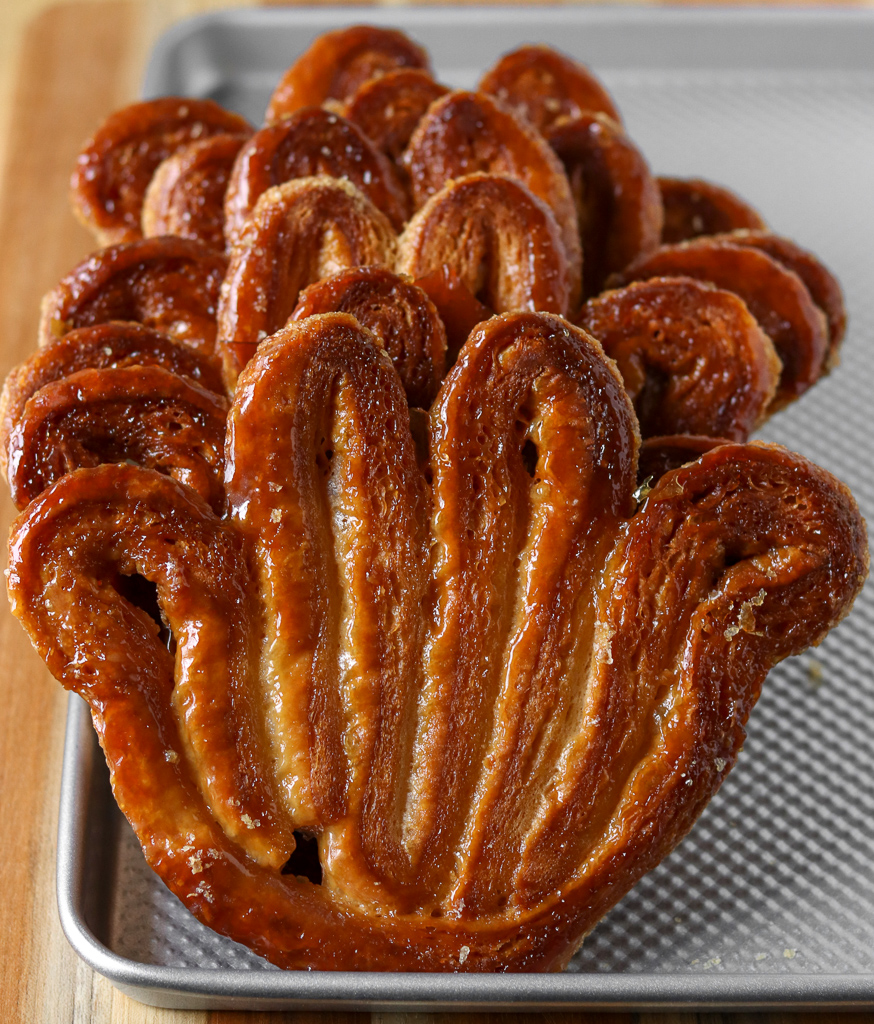
The flakiest bite of butter and sugar you’re ever gonna eat
The Bakehouse’s beautiful and delicious Palmier is another on the ever-longer list of pastries that have been enhanced by the recent addition of Vermont Creamery Cultured Butter. The Lemon Poppyseed Coffee Cake I wrote about last week; the Bakehouse’s full array of coffee cakes, scones, and croissants; the Roadhouse’s buttermilk biscuits, butterscotch pudding, and bread platter—all have long been really, really good and are now even better because of this terrific, traditional cultured butter. In the case of the Palmier, the butter is the star of the recipe, accompanied by a wonderful, darkly caramelized sugar.
Psychologist and author Angela Duckworth, whom I wrote a bunch about a couple of weeks ago, says, “There are no shortcuts to true excellence.” Patience and persistence will pay off over time. When we continually work to improve, we’re willing to invest in getting ever better. As the Bakehouse raises the bar by buying even higher-quality ingredients, that relentless commitment shows that great things really can happen, that quality improvement for the sake of better flavor can be a deciding factor in such growth, and that good finance only follows from there.
The Palmier may not be the best-known Bakehouse pastry, but, to my taste, it’s one of the best! There’s something so simple and yet so special about it: Crunchy sweetness. Compelling caramelization of sugar. A whole bunch of butter. There’s no frosting to obscure its simple elegance. It approximates what you’d get if you took the best parts of a croissant’s buttery, flaky, crunchy crust, then added plenty of sugar, shrank the surface area, and baked it. The pastry that results is lovingly caramelized by the magical Maillard effect and, in my opinion, worthy of poetry.
Palmiers are made from what bakers would call a “laminated dough,” similar in style to croissant dough, but without the yeast that makes a croissant rise. The baguette brings maximum crust to the bread world, and the palmier does much the same for pastries. You get a whole lot of crunch and almost no soft interior. Amy Emberling, co-managing partner of the Bakehouse, says,
They are like croissants and French baguettes and strudel to me—baking miracles. There are only a few ingredients: flour, butter, sugar, salt, a touch of lemon, and plain old water. Nothing unusual. Yet through some precise techniques, it’s possible to make these buttery, flaky, crisp, really delightful cookies.
The obvious thing to do with a palmier is to simply eat one. It’s great with a cup of Tree Town Blend from the Coffee Company or dipped into hot chocolate. You can also crumble it over gelato, or pudding, or rice pudding. If you like a sweet-savory combo, you can even spread one with cream cheese—killer! If you enjoy your salads on the slightly sweeter side, crumble one over the top to add the kind of crunch you get from croutons. Break some palmier up over hot buttered noodles for a really nice dessert pasta—a sort of high-end version of noodle kugel. Whatever you do with them, know that Bakehouse Palmiers are crumbly, crunchy, caramelized, butter-laden awesomeness.
Historically, the palmier probably dates back to the turn of the 20th century, so it’s not all that old in the scheme of the culinary world. What’s interesting is that it’s a chocolate-less pastry that came to prominence at the same time that chocolate was going mainstream. In French, palmier means “palm,” and that is what this pastry resembles visually. Palmiers appear around the world with various names and in slightly different forms. In the States, some folks call them “elephant ears.” In Germany, it’s “pig’s ears.” French Jews, I’ve read, serve them for Purim—they’re said to resemble the biblical villain Haman’s ears. In China, they’re called “butterfly pastries.” In Switzerland, they go by the name “hearts of France.” In Spain, they finish them with chocolate, coconut, or both; in Puerto Rico, with honey. Given that they’re so universally loved, perhaps the palmier, like the palm leaf it’s made to resemble, could be a universal pastry-symbol of peace. Bring a bag of them with you as a peace offering and think peaceful thoughts when you eat them.
Pastry chef and author David Lebowitz says, “Traditional French pastries have stood the test of time, and while it’s fun to venture outside the box, I often find myself craving the classics.” His top two picks? A buttery croissant and a palmier. Elsewhere, he reminisces about sitting at a small table in a Paris café and being “especially wowed by a well-caramelized palmier.” I might just send him a pack or two of ours!