
MLK Jr.’s dream, a Canadian folk singer from the ’60s, and leadership lessons from Indigenous Nova Scotia
A year before a young Bob Dylan’s story broke in New York City in the final days of September 1961, a 29-year-old Johnny Cash recorded a song entitled “Going to Memphis” for his sixth album, Ride This Train. Memphis was, indeed, where I went last weekend. No, I didn’t get out to the Johnny Cash Museum in Nashville, but I did spend a good couple of days attending the always inspiring and insightful sessions that make up the annual Southern Foodways Alliance Symposium.
Making time between sessions for a side visit to the National Civil Rights Museum in downtown Memphis, I was reminded of this uplifting declaration from Dr. Martin Luther King Jr:
I have a dream that one day, this nation will rise up and live out the true meaning of its creed … that all men are created equal.
While I don’t have the illusion that we can make Dr. King’s dream into a widespread reality by next Wednesday, I do believe, deeply, that it can be done. I’m not naive, though—I know full well that we have our work cut out for us. Every one of the 15 or so local Memphians who spoke at the symposium said some version of, “We’re living in an occupied city right now”—an unnerving but apparently very real reference to the show of federal force being imposed on an otherwise ordinary American city in the final quarter of 2026. We can, though, I believe, get moving toward Dr. King’s dream a whole lot sooner than many might think. We don’t have to wait for Washington, and it doesn’t require an act of Congress. As I write in the pamphlet “Why Democracy Matters,” the work at hand is a lot more about what we all do in our down-to-earth, day-to-day reality. Dr. King’s words don’t need to be limited to dream states—I believe we can make them real, beginning by opting for alternative ways to work, right here, right now, right in our own organizations.
Making a more egalitarian and inclusive approach our daily norm is not, of course, without its challenges. Just this past weekend, The Journal of Democracy declared,
Authoritarian regimes are pouring resources into artificial intelligence, hoping technology will finally solve their oldest problem: controlling people without depending on people.
I take the opposite tack: what if we were to pour our resources and energies into actively encouraging emotional intelligence, in the hope that human beings can resolve their oldest problem: accepting that, per Natural Law of Business #13, “it’s all out of control; all we have are varying degrees of influence”? What if we can learn to lean into the old AI—artisan intelligence—and embrace our inevitable dependence on others, while working to help develop the abilities and insight of the people around us? What if we swap a quest for control for creativity, compassion, and collaboration—and, instead of top-down hierarchy, we have a chance to work together as partners would? And although there may well be different levels of power and authority in our organizations, what if we endeavor to engage with everyone as if they’re an equal?
American peace activist John Paul Lederach suggests, “You never shift a harmful system unless you shift your questions.” Autocrats’ questions are cold and calculating—they argue over who’s in charge. Meanwhile, inspired by the beautiful, thought-provoking work of my longtime friend and teacher Peter Block, I’ve spent years learning to ask the kinds of questions that shift things toward Dr. King’s dream:
What would happen if we approached every person we dealt with as our equal?
What if every relationship, every conversation, every interaction we had at work felt—regardless of whom we were interacting with—as if it were between partners?
What if—regardless of the reality of the situation—we pretended that, other than in very extreme scenarios, we as leaders had no more power than anyone we employ?
What if you approached your “boss” as a peer and a partner, and challenged them (or me) constructively with different ideas and solutions? Not to complain, but to co-create?
In a strict sense, these questions form the core of the model that we adapted from Peter Block’s good work—what we have long called Stewardship. It’s based not on autocratic command and control but, instead, on caring, positive, peer-to-peer collaboration.
While this way of working is, always imperfectly, the norm around the ZCoB (Zingerman’s Community of Businesses), that’s not the case, I know, in most businesses—or in society at large. In fact, most people probably don’t even imagine that it’s possible. As 20th-century author and sociologist Lewis Mumford pointed out, one of the biggest challenges we face is an “inability to conceive alternatives, an unwillingness to reconsider old prejudices, to part with ideological obsessions, to entertain new ideas or to improve new plans.” This essay, then, is about elucidating one novel element in our organizational ecosystem—since, as we say so regularly around here, “you really can do business differently.” It’s an approach to work that, as Peter Block puts it, “allows us to act as equals, partners, with those around us. And to recognize we need other people to get anything done.”
This is not, I’m aware, a quick or easy change to make. My friend Manchán Magan, the amazing Irish writer, farmer, linguist, and lover of life—who sadly passed away a year ago last week—once observed, “How complex the world is, and how tiny we are.” Our relative smallness, though, doesn’t mean we have no influence on what goes around us. Just because something has become the status quo doesn’t mean we’re stuck with it forever—we don’t need to go with the widely accepted flow. And just because the “authorities” do things a certain way doesn’t mean we need to engage with power as they do. Meaningful change has to start somewhere—and it has to start with someone. So why not us? Why not here? And why not now? As Manchan used to say, we can learn to “turn the key against the sun.”
One of the best things I learned in therapy 30-something years ago emerged from a comment that my therapist, Richard Kempter, made rather matter-of-factly one afternoon. Out of the blue, he offered up this observation: People say that they want equality, but in practice, they really have learned only two ways of being in the world. They know how to be the “child,” with someone else having power over them. Or they understand how to be the “parent,” with power over a metaphorical “child.” Most people, Richard pointed out, spend the vast majority of their lives flipping back and forth from one of those roles to the other. Peer-to-peer collaboration is often what people purport to prefer, but the reality is that they have very little practice doing it.
In therapy, Richard’s lesson was helpful—and relevant, I realized, to some of the struggles I was experiencing at the time at work. Mostly, it seemed an intriguing sidebar in the midst of all the life learning I was doing. In hindsight, though, the significance of his insight was far greater than I was able to comprehend at the time. In fact, I’ll suggest that it might well be one of the most important issues with which we’re confronted: if we want to have democracy, we need to transform the wholly uncommon peer-to-peer connection between equals into the way we relate to each other every day.
Again, while no such change is ever simple to implement, we do have the power to get going. As historian Timothy Snyder, now teaching at the University of Toronto, reminds us regularly, “Small things can have huge impacts.”
Putting Richard’s insight into action helped me hold course as a leader as we began to shift how we operated here in the ZCoB. Practice, we know, doesn’t really make perfect, but it does, over time, make permanent. And if and when we can learn to work together as partners—to engage equitably and with equanimity, especially as we navigate disagreements—we stand a much better chance of doing the same with far bigger national and global issues that would otherwise tend to overwhelm or be used to incite violence.
While single CEOs seem like the norm, the all-too-common reliance on hierarchy and top-down exercise of authority is both ineffective and unhealthy. Robert Greenleaf, whose insights about intuition I wrote a lot about last week, addressed this well in his book Servant Leadershipback in the ’70s:
To be a lone chief atop a pyramid is abnormal and corrupting. None of us are perfect by ourselves, and all of us need the help and correcting influence of close colleagues. … The pyramidal structure weakens informal links, dries up channels of honest reaction and feedback, and creates limiting chief-subordinate relationships which, at the top, can seriously penalize the whole organization.
I, as you likely know, agree with Greenleaf.
The same morning that The Journal of Democracy shared its warning about autocratic regimes and artificial intelligence, Maria Popova, wise wordsmith of The Marginalian, penned what is essentially an ode to the inspiring imperfection of our inevitable humanness. It’s also, I believe, an accurate description of what it’s like to work effectively as partners and peers. As Popova puts it,
It is nothing less than a countercultural act of courage and resistance to remain undecided, to refuse to mistake for finished the works in progress we are, to remember that our task here is not to be certain but to be true—to our incompleteness, to the open-endedness of life itself, to the unhurried wisdom of the heart.
Indeed, while it rarely makes headlines, this more egalitarian approach is, I feel, far more sustainable. It’s a shift in beliefs that can make Dr. King’s dream come true.
Although the old hierarchical one-boss-rules-all method is widely accepted in the West, as Robert Greenleaf writes, it isn’t actually good for anyone:
The typical chief who rests uneasily at the top of the pyramid of any large institution is grossly overburdened. The job destroys many of them—which is reason enough to abandon the idea. But for the institution there is also damage. For in too many cases the demands of the office destroy these persons’ creativity long before they leave office. … Finally, the prevalence of the lone chief places a burden on the whole society because it gives control priority over leadership. It sets before the young an unwholesome struggle to get to the top. It nourishes the notion among able people that one must be boss to be effective. And it sanctions, in a conspicuous way, a pernicious and petty status striving that corrupts everyone.
Picking up on a parallel theme, Peter Block describes what becomes possible when we have the courage to work collaboratively with colleagues instead of having to stick with the typical, rigid, top-down 21st-century organizational structure. In the now nearly 40-year-old book The Empowered Manager, Block writes,
Within each of us is the ability to create an organization of our choosing. When we believe that, it is good for us and good for the organization. That belief—that it is possible for me to create a place I believe in, even in the midst of a group of automatons, an empty desert, or a risky marketplace—is the entrepreneurial spirit.
That work, of course, is easier described than it is done. As Richard Kempter conveyed to me many years ago, growing up within hierarchical systems means that most of us won’t quite know how to shift the dynamic. We may not be consciously aware of it, but, as Peter Block points out,
There is a part of us that does not want more autonomy, choice, or responsibility. We want to be taken care of. We like the patriarchal contract. We want our bosses to be good parents. Choosing ownership, agency, and partnership means giving up safety. None of us gives up safety gracefully. Claiming freedom and autonomy means sacrificing innocence and security. This is the transformation we are moving through; it is difficult and demanding, and it triggers deep ambivalence.
In a practical way, what Peter describes is exactly what we endeavor to do here in the ZCoB, using the framework for Stewardship adapted from his book of the same name, published over three decades ago. As I write in Secret #24 in the book Being a Better Leader,
Stewardship is probably the least glamorous “secret” in this book. … Stewardship is the heavy lifting [of leadership] without the excitement. It’s very much about the nuts-and-bolts, below-the-surface relationship building that makes it possible to really make all of what we do work. Saying we believe in equality and democracy pretty much goes without saying in North America, but actually acting as if everyone is equal regardless of the formal authority anyone may or may not have isn’t all that easy. Stewardship is where it starts.
Can we make this shift from hierarchy to partner-partner happen? Absolutely. Can we do it quickly? Well, truly impactful change takes time, and the more people who need to make the change, the more time it’s likely to take. Attempting to alter long-held belief systems is not an insignificant shift. (See Secret #43, “A Recipe for Changing a Belief.”) On top of that, when most people say they want change, what they actually want is for others to change. This work, though, starts with us—and it requires persistence and patience.
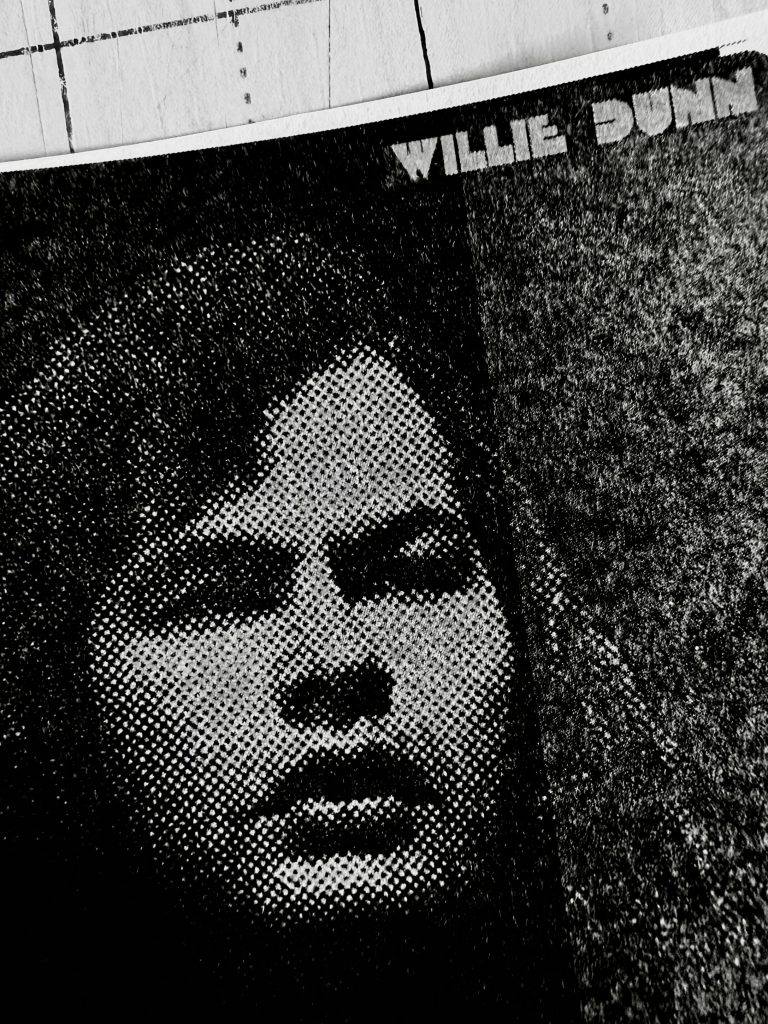
Going back to last week’s exploration of intuition, Bob Dylan was born in Minnesota in the spring of 1941. Three months later, further east, another artist—far less famous but perhaps equally important—was born in Montreal: the Mi’kmaq musician and filmmaker Willie Dunn. Dylan, as I shared last week, had his first big break with the press not long after he turned 20, in the fall of ’61, and his first record came out several months later, in the winter of ’62. It was 1971—nearly a decade after Bob Dylan’s debut album was released in the States—before Willie Dunn got his first record out, entitled simply Willie Dunn.
Where Dylan’s words were wonderfully poetic, pieced together intuitively into an incredible array of images, Dunn’s were far more straightforward: powerfully told, thought-provoking, poignant stories that addressed any number of social inequities, most notably those facing the Indigenous people of North America, of which Dunn was one. Dylan once said, “Songs, to me, were more important than just light entertainment.” In that regard, Willie Dunn went on to make just the kind of music Dylan dreamed of. As Dunn’s son, Lawrence, would say of his father many years later, “The stories that came out of his head were always the best ones.”
Charles McKinney, professor of history at Rhodes College and author of From Rights to Lives: The Evolution of the Black Freedom Struggle, pointed out at the Southern Foodways Symposium that the so-called European “civilizers” skipped over some incredibly significant life lessons and ways of being in the world that had already existed here in the Americas long before the English, French, and Spanish arrived. “Those stories,” McKinney says, “are concealed.” In the context of the Indigenous people of Canada, Willie Dunn devoted his life to revealing what had been concealed, to setting the record straight about Indigenous rights, and to retelling those stories from the perspective of his own people.
Unfortunately, there was a lot of painful material for Willie Dunn to work with. The anti-Indigenous bias that Dunn’s songs and films fought against went back centuries. In 1749, Edward Cornwallis, British governor of Nova Scotia, issued a bounty of 10 guineas for every Indigenous person “taken or destroyed.” Four years later, Governor Charles Lawrence upped the ante to 30 pounds for “every male … above the age of 16 years”; women and children brought 25 pounds. And as has also been true here in the US, that bias has continued, both culturally and systemically, for centuries, straight through to today.
Willie Dunn has never really been widely known in the States, but he certainly made his mark north of the border. Contemporary Canadian folk musician Eric Landry says, “In talent, he is [Leonard] Cohen, Dylan, and Cash rolled into one.” The folks at Light in the Attic Records write, “Willie Dunn was not only a trailblazing leader in his time, but well ahead of the curve, simply without the PR push and big money backing of major label players.” And not surprisingly, intuition was a large part of the way Willie Dunn worked. In a retrospective on Dunn in the spring of 2021, CBC Radio reported that he “rarely had a setlist, instead relying on intuition and his bandmates for the next song.”
In 1968, at the age of 27, Dunn released what many have come to call Canada’s first-ever music video. (For context, this was only eight years after Indigenous Canadians had received the right to vote.) “The Ballad of Crowfoot” is a stunning 10-minute telling of the tale of the great 19th-century Siksika (aka Blackfoot) Chief Crowfoot (1830–1890) and the long series of betrayals by Europeans that beset his life and strong leadership. The movie was made with the first all-Indigenous production crew in Canadian film. In line with the quote from Lewis Mumford above, Dunn showed young Indigenous artists what was possible. As he would later explain, “It’s important for aboriginal people to tell their own stories, because Hollywood has done enough.” The song and the film are both remarkable.
Really, Willie Dunn’s songs were, and still are, heart-stopping, cinematically sweeping chronicles of the reality of life for the Indigenous peoples of Canada. The first cut from Dunn’s debut album to be released as a single was the immensely powerful “I Pity the Country.” The song (which contemporary musician Kurt Vile said is “like the reason you’re supposed to make music”) is, it turns out, tragically and chillingly, far too close to our 21st-century state of being on this side of the Canadian border:
I pity the country.
I pity the state
and the mind of the man
who thrives on hate.Small are the lives
of cheats and of liars,
of bigoted news press,
fascist town criers.
Willie Dunn did make a big difference. As Indigenous elder Albert Dumont writes, “Please understand that Willie and other activists, singers, and poets of his generation had no role models to direct them. … The drum and our ceremonies came back into the light because of them.” Dunn always stood firm for his people—there’s even one story that circulated about a time in 1971 when he leaned over to whisper in Queen Elizabeth’s ear during her visit to Canada, “We are not your children anymore.”
Later in life, Dunn took to painting, adding yet another form of artistic expression to accompany his music and his filmmaking—and he continued to tell the story of Indigenous Canadians through that medium. Two of his best-known films are These Are My People, released in 1969, and The Other Side of the Ledger: An Indian View of the Hudson’s Bay Company, from 1972. As contemporary Indigenous Canadian musician Raven Kanatakta, a friend of Dunn’s, observes,
[Willie] wanted people to understand the history of Canada—the true history, not the kind of false colonial history they teach in schools, but the history that is actually real. Willie shared his music because he wanted the humanity in people to understand. He didn’t want to scold people, or reprimand people in any kind of way. He just wanted to sing the truth, and tell the truth, and let people with their own minds decide how they felt about those things.
Speaking of history, Dunn would later write a song entitled “Charlie” based on the story of Chanie Wenjack, a 12-year-old Indigenous boy who died in the cold and snow after running away from one of Canada’s residential schools. These schools, first opened in the 1820s, were one of the most extreme examples of anti-Indigenous bias—the last one was finally closed down in 1997. During that time, over 150,000 Indigenous children were separated from their families, and thousands—like Chanie Wenjack—died; the practice of their language and customs was banned, and abuse was rampant. Instead of Dr. King’s dream, they got a nightmare. The country’s Indigenous people were treated deeply unjustly, and not at all as peers, partners, or equals.
As you can tell, I’m greatly interested in Willie Dunn simply because of his music, and the inspiration of what he was able to accomplish in the face of adversity and bias. I’m also intrigued, though, by the tradition of his tribe, the Mi’kmaq people of Eastern Canada. In line with the focus of this essay, the Mi’kmaq have lived for centuries treating everyone they engage with as equals. While the Europeans were hung up on hierarchy, the Mi’kmaq have long been governed by consensus of the elders of their Grand Council, with the elder of each community known as the “sagamore” (an accidental linguistic similarity, I note with a smile, to our own wise elder Paul Saginaw). It’s a method of governance highly parallel to what we’ve been doing here in the ZCoB with the Partners Group for over 30 years now.
The Mi’kmaq created a model for leadership that is a stark—but very compelling—contrast to the hierarchical one that we typically see in the news these days. The Union of Nova Scotia Mi’kmaq explains that, historically, chiefs were always expected to work as equals, acknowledging that while they did in fact have power, the value of their power came not from exercising force, but from their ability to inspire:
[Being] fair, generous, a skilled hunter, a great warrior, a great orator … would be preferred to being older with more experience. … Specifically, the chief had to have the respect of his people, and accomplished this by meeting the needs of community members and conducting himself in a dignified way showing intelligence, knowledge, and insight. … Chiefs also had to set an example for their followers. It was important that chiefs did not accumulate material wealth because sharing among the Mi’kmaq was an important survival tactic and a way to ensure loyalty.
Throughout their history, the Mi’kmaq have worked caringly, collaboratively, and equitably—as their phrase toqi’maliaptmu’k expresses, “we will look after it together.” Their focus, always, was on equitable allocation and use of resources; the idea of excessive accumulation—on which Europeans were so focused—was totally alien to the Mi’kmaq. You simply would not take more than you needed. It’s a culture, too, in which dreams—like Dr. King’s—matter a great deal in connecting the past, the present, and the future.
Researcher and writer Brené Brown is someone else who’s been writing about this idea of partner-to-partner relationships for years. “What makes power dangerous,” she says, “is how it’s used. Power over is driven by fear. Daring and transformative leaders share power with, empower people to, and inspire people to develop power within.” Whether we’re learning it from Dr. King, Peter Block, the Mi’kmaq, or Brené Brown, the point is very much what Taylor Cocalis, co-founder of Good Food Jobs, wrote last week: “Flow, not force.” By engaging with each other as equals, as partners, we help each other to create our own freedom. Instead of pushing back against one another, we can collaborate, lean in, learn together, and create outcomes in which everyone involved comes out ahead.
Part of the challenge of relating as peers and partners is, of course, getting those of us who have power to put it aside in the interest of egalitarian engagement and long-term health, wealth, and wonderment for the many. We need to slow down and make space, and open office doors rather than keep them shut. We need to let people voice dissent. We need to let them say no without responding, “No way!”
Equally challenging, though, is getting people who’ve spent a lifetime waiting for orders, and being told to keep their thoughts to themselves, to now speak their minds in caring, constructive ways. Folk singer Billy Bragg, the British heir to the tradition of Woody Guthrie, Bob Dylan, and Willie Dunn, says, “We live in an age of rage. People feel their voices are ignored.” When folks have been taught to believe bosses don’t care—and, worse still, that they’ll end up in trouble or even lose their jobs for saying the “wrong” thing to someone “higher up” on the org chart—getting them to change those beliefs and voice their thoughts as partners is much easier said than actually practiced. It can be done, though. As Peter Block notes, “Our goal is to have all members believe and act like this is their organization and to take personal responsibility for how it operates.”
Raven Kanatakta shares what Willie Dunn said when asked once how he wrote songs. “I write songs that will last 300 years,” he replied. Dunn died in the summer of 2013, at the age of 71, but his legacy lives on through his music, his films, and his paintings, as it will for many centuries to come.
I’ll close, then, with these lines from Dunn’s song “Son of the Sun.” They are words that echo those of Dr. Martin Luther King Jr.—words that, over time, I have every reason to believe can be made real:
I had a dream
of my own accord:
we laid to rest
the gun and the sword.
Buried the hatchet,
buried the stake,
bowed to each other,
peace to make.
P.S. On Tuesday evening, October 27, I’ll be doing a book event on “Why Democracy Matters: A Deep Understanding of Democracy in Our Everyday Lives” at the Roadhouse. Lots of good conversation, a Q and A, and an array of Roadhouse appetizers—including some terrific, appropriately apricot-oriented offerings—are part of the program, and you can order whatever food and drink you’d like above and beyond that! Grab a seat soon before it sells out.
P.P.S. Want to learn a lot more about how we put this partner-to-partner, peer-to-peer way of working into practice? Come to ZingTrain’s two-day Leading with Zing! seminar on November 9 and 10.
Other Things on My Mind
Listening
Any music you can find from Willie Dunn is well worth listening to. My favorite of all the current compilations, though, is 2021’s Creation Never Sleeps, Creation Never Dies: The Willie Dunn Anthology. I’ve liked it since the day I discovered it nearly five years ago, and I’ve listened to it about 20 times now in the past two weeks! Great tunes, historically haunting lyrics, and a remarkable window into Indigenous Canadian history.
This is a powerful modern-day remix/remake of “I Pity the Country,”—performed by Canadian Anishinaabe artist Leanne Betasamosake Simpson on her 2021 album Theory of Ice—which includes clips of Willie Dunn interspersed with Simpson’s own superb visual and musical work.
Speaking of Canada, Svitanok is the debut album from the Montreal-based Ukrainian band Murmurosi (or, in Ukrainian, Мурмуроси). The title means “dawn” and comes from the Ukrainian saying “Life will overcome death, and light will overcome darkness.” The group sings a range of traditional Ukrainian songs, with backing from guitar, trombone, trumpet, piano, bass, and the classic Ukrainian bandura. Ukrainians have suffered much the same sort of attacks from Russia as the First Nations people of Canada did from the Europeans—including forced “reeducation” and the banning of their language, music, traditional dress, et cetera. Accordingly, the band dedicates the album “to those who came before us who guarded these songs with their lives, and to those who will come after us and do the same.”
On the theme of Indigenous peoples oppressed by colonial rulers—and thinking of the anniversary of the amazing Irish writer and linguist Manchán Magan’s sad passing a year ago—Slí na Samhlaíochta (The Way of Imagination) is a new spoken-word album with words by Manchán and music by Simon O’Reilly and brilliant filmmaker Myles O’Reilly that just came out from Claddagh Records.
Reading
Thanks to Mike Weber for turning me on to the insightful book Antifascist Architecture. Released last spring by the University of Chicago Press, it’s written both for architects and for folks like me who know nothing about buildings but are intrigued by the history of the work. The design of the volume is every bit as beautiful as one might imagine. (If you’re in New York City, one of the authors, Daniel Jonas Roche, will be doing an event about the book at the Cooper Union on Tuesday evening, October 20.)
Looking
A great article in Hyperallergic about the incredible Labadie Collection here in the Graduate Library at the University of Michigan. It’s the place where I first started to study anarchism, not all that many years after Willie Dunn began making records.