
What it is, why it matters, and how it just might change the world
A hundred years ago, in the spring of 1926, a relatively little-known 32-year-old dancer formed what she decided to call the Martha Graham Center of Contemporary Dance in New York City.
I don’t know that anyone other than maybe the determined, deeply visionary Martha Graham herself had a sense of how much this seemingly small decision would go on to alter the beliefs of millions of people about what was possible with dance.
Today, in 2026, the impact of Martha Graham’s work is easy to identify. Graham dramatically transformed the world of dance, changing thousands of lives and an entire art form in the process. As PBS puts it, “Martha Graham’s bold American vision sparked a revolution in dance.” Lo that we might all have that sort of revolutionary impact in the line of work we’re engaged in. If the rest of us can come close to making the kind of positive mark on our worlds that Martha Graham made on hers, the planet would be a very positive place to be.
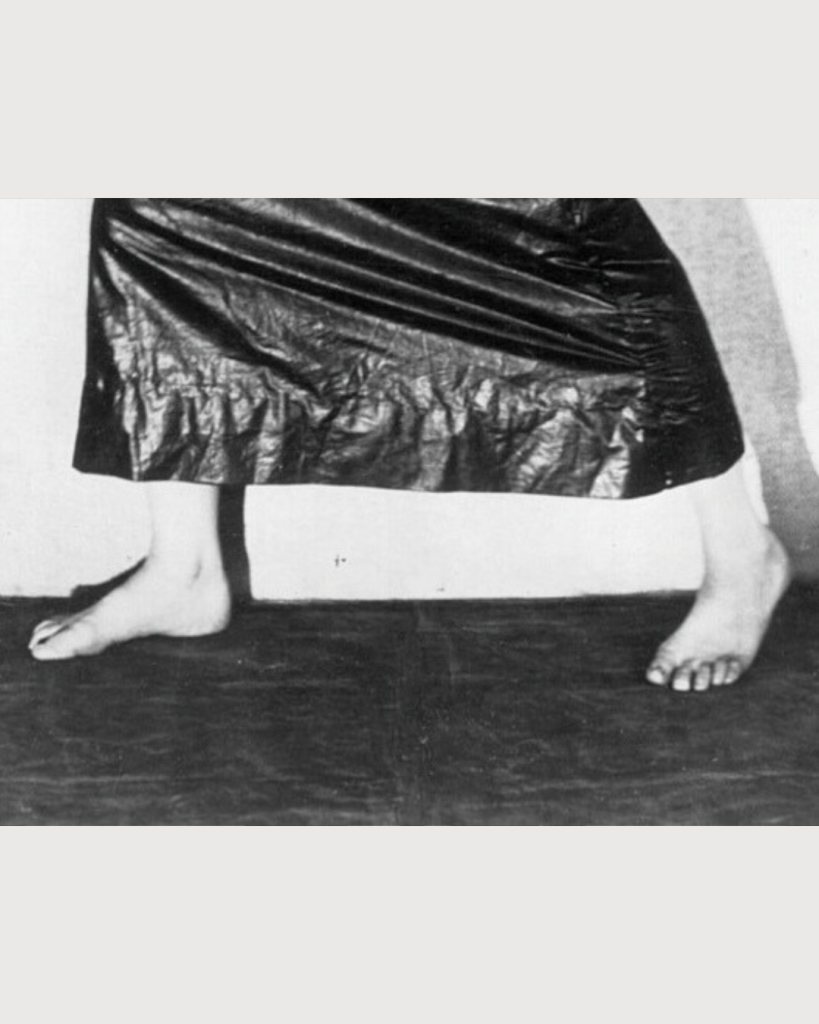
In a June 2026 New York Times article entitled “Why the Radical Vision of Martha Graham Still Matters,” journalist Gia Kourlas writes, “The choreographer took a barefoot leap for modern dance 100 years ago. Her influence continues to reverberate.” As Kourlas explains,
Modern dance wasn’t just a barefoot step away from popular forms like ballet and vaudeville. It was a new expression, and within its raw angles were psychological truths. Graham (1894-1991) distilled human emotion into moving, living shapes. She found a way for dance to take up serious space in a bigger artistic world.
She was a visionary, a choreographer who throughout her long career fought fascism, explored the American dream—and its inherent tensions—and stripped Greek myths to their bare essence. She pioneered a dance technique so formidable, so flowing and complete that it can be as fortifying to watch a class as it is to see a classic Graham dance.
I think about the magic and depth of Martha Graham in the context of what I’ve learned from the creative business thinker Carol Sanford (as much a radical visionary in the world of leadership as Graham was in dance) to call Deep Understanding. In her 2023 book,No More Gold Stars, written when she was entering her 80s, Sanford says, “My responsibility is to consider what is being said and, through conscious discernment, to deepen my understanding of it and perhaps generate new meaning with regards to it.” Which is, indeed, what Martha Graham seems to have done over the course of her 90-plus years on the planet.
What is Deep Understanding? Here’s a four-part framework I adapted from Sanford’s amazing work:
1. It happens in an area of knowledge that has already existed, and has been acknowledged in some way previously. Humans have been dancing for millennia, long before Martha Graham got going at the turn of the 20th century. Ana Lua Caiano did not invent Portuguese folk music, nor was she even old enough to have been part of the Portuguese Revolution in 1974 that so significantly informs her art. Seth Godin was certainly not the first person to write about differentiation in business. And yet all of them, I believe, developed Deep Understanding in their area of passion.
More personally, my initial dive into understanding Deep Understanding was, in part, prompted by the work on the chapbook “Life Lessons I Learned from Being a Line Cook.” Line cooking might often be seen as mundane, but reflecting on what I had written and, at the same time, reading Carol Sanford’s work helped me realize that line cooking was the doorway to the philosophy and mental frameworks that have made the Zingerman’s Community of Businesses (ZCoB) possible.
2. It creates new learnings and ways to see, and be, in the world. People like Martha Graham who attain Deep Understanding take what has long been well accepted in their field, then find ways to turn it inside out, shift it sideways, break it all down, and put the pieces back together in completely new ways. Sometimes the changes they make are big ones. Often, though, they are seemingly small shifts that, over time, turn out to have significant impact. Graham, as one example, got rid of ballet shoes; in the interest of bringing out the humanity in her dancers, she had them dance in bare feet. On a bigger scale, she developed an entirely different dance technique, which has long been named for her. As Gia Kourlas noted in the Times this past spring,
During the 1920s, [Graham] conceived her principles of contraction and release, in which movement is initiated from the pelvis. In her technique, tension and release—fueled by the inhalation and exhalation of the breath—drives the body to indisputable strength or excruciating vulnerability.
3. It synergistically improves the lives of others who are impacted and influenced by the understander. People who have reached Deep Understanding, Sanford says, have helped those around them to “change their lives, their families, and their commitment to service in the world.” Certainly, Graham did just that. As one of what are probably millions of examples, two years ago next month, dancer Abigail Baden wrote of Graham, “Her work has taught me that vulnerability is strength, and that true expression lies in embracing the divine imperfection of human life.”
4. It helps the person who has the Deep Understanding to more meaningfully become themselves in the process. Deep Understanding helps bring that potential out into the world. The energy of people who have done this work well seems to be universally engaging and inspiring. As Carol Sanford suggests, “Think of yourself as unfinished, a living expression of your own potential.” This is most definitely true for Martha Graham. As musical director Louis Horst, Graham’s longtime mentor, told her, “Don’t follow the music. You are the music.” While Graham changed thousands of lives through her art, she also grew into herself with ever-greater effectiveness, following Horst’s advice: “Dance for yourself. If someone understands, good. If not, then no matter—go right on doing what you love.”
Seth Godin says, “The key to success is to find a way to stand out, to be the purple cow in a field of monochrome Holsteins.” Not everyone who becomes a “Purple Cow” has attained Deep Understanding, and not everyone who attains Deep Understanding is completely in the camp of Purple Cowdom. There is, though, a thoughtfully meaningful overlap. Deep Understanding is, in the context of last week’s writing, what I believe Seth Godin arrived at, in the form of what others simply called “differentiation,” when he wrote Purple Cow. It’s what Ana Lua Caiano has leaned into when it comes to Portuguese folk music. Both took a long-standing skill or idea, adapted it by combining it with other insights, and emerged with something new altogether—an approach that was really all of their own making. As a result, they—and those who appreciate their good work—have benefited greatly, and will continue to benefit for many years to come.
This past weekend, without using the term itself, theologian Richard Rohr described very much what Deep Understanding can accomplish:
I believe good art has the power to evoke an epiphany. Sometimes, when we can’t take our eyes off a picture or work of art, an epiphany is happening. We don’t yet know what we’re knowing while the wisdom of the unconscious is being ferried across to the conscious mind. … On one of my very first speaking trips away from Cincinnati, I visited the St. Louis Art Museum. They had an exhibit of Claude Monet’s water lilies; some paintings took up the whole wall. It was a quiet weekday afternoon, and as I went from room to room, I found myself getting quieter and happier, quieter and happier. When I walked out into the sunshine after the exhibit, I felt like I floated home. I wasn’t waiting for an epiphany, but I think I was granted one anyway. … The experience connected me to something deep and true within.
Art, as I shared in the pamphlet “The Art of Business,” can refer to any and all aspects of our lives, at work and elsewhere. Or, as my friend Sarah Harris, founder of the band Dolly Creamer—and, like Graham, a native of Pennsylvania—sings in her song “Icicles,” “Your smile is art, your face is art, your legs are art.”
The phenomenon Rohr writes about seems to have been very much true with the dance of Martha Graham. Even though I know next to nothing about dance as an art form, I do know a fair bit about social change, positive leadership, and what it takes for creative thinkers to walk their own way in the world. What writers do with words, what painters put onto canvas, what poets create with multisyllabic synergies, I’ve come to see that dancers—Martha Graham being whom I have in mind in this case—can do with the movement of their bodies.
Graham’s father used to tell her that “movement never lies,” and when I watch film clips of performances she did with her dance company, the truth is, my mind is blown. It’s pretty clear even to a novice like me that Martha Graham changed the dance world in dramatic ways. Check out this clip of her 1929 performance of her piece Heretic and see if you, like me, experience something deep and true.
Richard Rohr continues:
Great truths—when they can be visualized in images—reveal deep patterns and reveal that we are a part of them. That deeply heals us, and it largely happens beneath our conscious awareness. A great story pulls us inside of a cosmic story.
That too, it strikes me, sums up the story of Martha Graham. And if your attention was caught by the clip of Heretic, here’s one of 1944’s Appalachian Spring.
To understand how much Graham changed her corner of the art world: if you’d gone to see a professional dance performance in Manhattan in 1884—the year Martha Graham was born in Western Pennsylvania—what you would’ve witnessed would have almost certainly been ballet. Half a century later, that reality had shifted drastically, in great part because of Graham. As Gia Kourlas writes in the Times,
There are dancers, and then there are dancers—the kind that shoot sparks through your insides, the kind that erase the tired from your eyes, the kind that quicken your pulse to the point that you feel you’ve just danced yourself.
This was Martha Graham.
Today, modern dance is easy to find in almost every arts program, but a century ago, it had professionals around the planet freaking out. People panned it as ugly, harsh, and brutish. Sharma Howard writes in The Bulletin, “Critics were initially revolted by Martha Graham’s pioneering dance movement. They didn’t like her bare, groping, flexed foot after being used to the pleasing lines of the pointed toe in ballet.” Like everyone who leads positive change, though, Martha Graham did not give up. To the contrary, she ended up radically altering what people thought of as dance. This is from a piece posted on the Kennedy Center’s website (yes, that suddenly controversial national center for the performing arts):
Early modern dancers didn’t know they were starting something new. They just wanted something different. They wanted to express themselves through movement, but ballet was too old and too stiff—and there were too many rules. The early modern dancers didn’t like rules. They were rebels. They were freethinkers, they were American, and most of them were women.
How different was Martha Graham’s approach? In the spirit of Deep Understanding, she took the well-accepted ideas of ballet and inverted them, determinedly pushing forward even in the face of exceedingly harsh criticism. Describing Graham’s performances in The New Yorker earlier this year, Jennifer Homans writes,
One way to think of it is as anti-ballet. Ballet strives for symmetry and harmony, for spinal alignment, turnout, balance, and flow—its goal is lightness and flight. Graham bodies were rooted, with a strong center of gravity while being flexible through the spine, and she excavated areas of the body that (in the Western tradition) had been locked or hidden through convention or denial. Her goal was to mine intense emotion and hardship, to live on the earth rather than aim for the heavens.
That last bit—about mining intense emotion and hardship to live a purposeful life in the present moment—is, I’ll add, exactly what I, too, hope to be able to do. The more we come together with others who seek to do the same, the healthier our ecosystems will be. As Carol Sanford writes, “One must grow a culture and community of fellow seekers, each aiming to break the mechanical patterns of their thought.”
Two years ago this coming winter, I met San Francisco–based psychiatrist Ravi Chandra at a book event I did after the pamphlet “A Revolution of Dignity in the Twenty-First Century Workplace” came out. I’ve been reading Ravi’s e-news and emailing with him regularly ever since. Last month, reflecting on the state of our country, Ravi issued a carefully worded written warning: “We are at the brink of a collapse.” Serious as that sounds, he didn’t stop with impending demise. Instead, he inverted that anxiety and expressed his hope and belief—which I absolutely share—that “we can rise with creativity and allyship.” History can be seen to be on our side. In a sense, what’s taking place today is not as new as we might imagine: in 1926, the year that Martha Graham formally founded her dance troupe, the country was six years out from a global pandemic, and wealth was being consolidated at previously unprecedented levels among a small group of money-focused men.
One of the best ways I know to answer Ravi’s call to “rise with creativity” is to take as many deep dives into Deep Understanding as possible. As what I would consider a close first cousin of the Purple Cow, Deep Understanding is also about doing something different. It’s about in-depth study combined with creative connection and aspirational application. It’s about attaining justice by living out an informational spirit of generosity. People who attain Deep Understanding almost always make a major impact on the world. By definition, they’re forever busting their butts—usually, it seems, in happy, helpful, and holistically sound ways—so that all of us can rise, per Ravi Chandra’s recommendation, with creativity and allyship.
Carol Sanford says that “understanding is experienced in three centers—intellectual, emotional, and moving centers.” Martha Graham, it seems clear, did a lot in all three areas, moving far more than someone, like me, who does a lot of his learning by reading and writing. And how different was Graham’s work from what came before? Very. As different, it seems, as what Bob Dylan did with folk music. Or what Alice Waters did with food at Chez Panisse. Or, for that matter, what John Thorne—who passed away late last month, at the age of 83, at his home in Maine—did for food writing, shifting away from the then-common focus on “gourmet food” and writing instead about down-to-earth, homemade, and exceedingly unfancy food in his early-’80s newsletter, Simple Cooking.
With all that in mind, Martha Graham, I’ve come to realize in recent months, is a wonderful role model for those of us also interested in making a difference. She grew up in a middle-class family, far from the urban arts centers. She started dancing relatively late in her life (in her teens, versus the apparently more common beginnings most dancers have well before they turn 10), and she didn’t fit neatly into the era’s socially accepted beauty standards. Inspiringly, she didn’t let any of that stop her. She had a vision, and she was determined, no matter the outside opposition, to make it happen.
Graham wasn’t merely immersed in her art, however. She was also deeply engaged with the world. Drawing on Emma Goldman’s line “If I can’t dance, I don’t want to be part of your revolution,” writer Dana Mills titled a Jacobin article about Graham “We Can Dance, and It Will Be Our Revolution.” Graham, Mills makes clear, “developed a language of radicalism in movement.”
So, for those of us who seek a similar positive radicalism in our respective realms, why does Deep Understanding matter?
1. It helps us find our place in an ever-more-complex world.
In her 1998 bestseller The Orchid Thief, Susan Orlean (a classmate of mine here at the University of Michigan back in the day), writes,
The world is so huge that people are always getting lost in it. There are too many ideas and things and people, too many directions to go. I was starting to believe that the reason it matters to care passionately about something is that it whittles the world down to a more manageable size. It makes the world seem not huge and empty but full of possibility.
The work to attain Deep Understanding is, I believe, a good way to put Orlean’s outlook into practice. It doesn’t restrict us, but it does invite us to go deeper and deeper into a field of study in which we’re deeply interested. In my own experience, it’s doing the work to arrive at Deep Understanding of dignity, democracy, and a dozen other subjects. It’s what I would say—now, in hindsight—we did with the Deli in 1982. It’s what Ji Hye has made happen at Miss Kim (celebrating its 10th anniversary this month—congrats!).
By delving deep into an area of passion, we build expertise and grow more grounded. Deep Understanding definitely brings the world into focus at a much more human scale. It’s something we dig into and get down with. In the context of Purple Cows, it lets us differentiate ourselves in heartfelt, truthful ways that serve both us and those who benefit from our work.
2. It’s a way to change our world productively and positively.
Not only did Martha Graham change the dance world—she used her platform to stand up for her values in the world at large. Graham’s was the first dance troupe to hire professional Black dancers, in an era when Jim Crow was still well ensconced across the country. In March of 1936, Graham boldly turned down an invitation from the Nazi regime in Germany to come and dance in conjunction with the upcoming Summer Olympics. As The New York Times reported,
Martha Graham, one of this country’s leading dancers, revealed last night that she had declined an invitation from Germany to represent the United States at the International Dance Festival to be held in Berlin next Summer with the Olympic Games. … Miss Graham’s letter of refusal said: “I would find it impossible to dance in Germany at the present time. So many artists whom I respect and admire have been persecuted, have been deprived of the right to work for ridiculous and unsatisfactory reasons, that I should consider it impossible to identify myself, by accepting the invitation, with the régime that has made such things possible. … In addition, some of my concert group would not be welcomed in Germany.
That last line is in reference to the abundance of Eastern European Jewish women in Graham’s early dance groups. Graham’s American Document (1938) has long been considered an actively anti-fascist artwork. Gia Kourlas writes in the Times,
In her searing “Steps in the Street” from “Chronicle” (1936), created in response to the rise of fascism in Europe, rows of dancers in long dark dresses cross the stage, their bodies stark and stiff. They know suffering, they know the scent of death.
3. By teaching and modeling Deep Understanding, we can help others to become themselves.
In her 1953 appearance on the CBS Radio show This I Believe, Martha Graham said, “I believe that we learn by practice.” With her wise words in mind, it seems clear that the more we work at developing an awareness of Deep Understanding, the more we model what’s possible, and the more we demonstrate to others what they can also do, the healthier our organizational ecosystems are almost certain to be.
Carol Sanford says, “My work goes into helping people understand what it means to help people evolve capacity in the way that life works.” It’s my strong belief that everyone we meet has the potential to bring out something amazing, life-altering, and endlessly energizing from inside themselves. German Jewish pacifist anarchist Gustav Landauer, murdered by the German army in 1919 (back when Martha Graham was still an aspiring student at the Denishawn School of Dancing and Related Arts), once said, “People have not yet understood that they have to free the power that lies within themselves.” The work toward Deep Understanding can help them get there.
Unlike in autocratic settings, where only the boss matters, Deep Understanding encourages each person to explore their own dreams, passions, and skills. As Graham herself wrote in her autobiography, Blood Memory,
I want the dancers in my company not to be like me. I want them to have studied with me, of course. I want them to be themselves and I encourage them to do that. I want the dancers to learn the dance physically, strongly, and then put their own meaning into it, if they can dare do that. I don’t believe in having stereotyped mes running around. They should bear the mark of my work while feeling free to be the individuals they are.
4. It helps us bring together history, philosophy, and practice in the service of creating something special.
I wrote a piece on this two years ago, based on the writing of Kurdish sociologist Dilar Dirik. Each of the three on its own—history, philosophy, and practice—is good. When all three are done together over a long period of time, they’re a framework that brings us ever closer to Deep Understanding of our own. Why? Because when we immerse ourselves in history and philosophy, when we work hard to figure out how to make things work, and when we begin studying actively to find ways to do whatever “it” is differently or better, the odds are high that we’re going to end up somewhere special.
5. Being around others who’ve attained Deep Understanding is inspiring.
It turns out that the same Russian émigré artist I wrote about last month was an inspiration to the modern dancer a generation younger. Graham described being at the Art Institute in Chicago when she was a young woman:
I saw across the room a beautiful painting, what was then called abstract art, a startling new idea. I nearly fainted because at that moment I know I was not mad, that others saw the world, saw art, the way I did. It was by Wassily Kandinsky, and had a streak of red going from one end to the others. I said, “I will do that someday. I will make a dance like that.”
Lest you think that this stuff about Deep Understanding is only about artists, authors, cooks, musicians, and poets, take a look at the recent book Trash! A Garbageman’s Story. (Thanks to Tammie for gifting me a copy!) Simon Pare Poupart is a Quebecois who began his adult life as a sociology major but later found himself and his life’s work as a Montreal garbageman. As a grad student, Pare Poupart ended up with a second job as a garbageman in Montreal. Having tried his hand at academia, he found himself floundering. Instead, he opted for the freedom of working on the garbage truck. Lily Meyer, writing about Pare Poupart in The Atlantic this past spring, says, “In Trash, he brings his two careers together, although he never allows the writer side of himself to outshine the garbageman.” In the book, Pare Poupart explains,
Our brotherhood is a gathering of marginal deviants, antisocial conspiracy theorists, eccentrics, and others who have a hard time fully integrating into the “straight world.” This outsider status forges our identity as garbagemen.
Our work as garbagemen resembles elite sports for its combination of performance, toil, and pushing yourself to new feats. But our extreme sport is performed for members of the lower classes. In our world, that’s enough to belittle you. The garbageman puts his health at risk for society as a whole. He takes great pride in it.
When all is said and done, I look to Deep Understanding as a peaceful way to make our world, our work, our lives, and the lives of those around us so much better. Whether it’s Seth Godin’s Purple Cows, Ana Lua Caiano playing ancient Portuguese drums and a synthesizer at the same time, Martha Graham’s amazing dance, Carol Sanford’s radical thinking about business, or Simon Pare Poupart thoughtfully hauling trash, those who have attained Deep Understanding are living good lives, contributing good things to the people and communities around them. An ecosystem in which Deep Understanding is well ensconced is almost certainly a healthy one. Our work is to figure out where and how we might want to reach Deep Understanding in our lives. As Martha Graham made clear in advice she gave to dancer Agnes DeMille,
There is a vitality, a life force, an energy, a quickening that is translated through you into action, and because there is only one of you in all of time, this expression is unique. And if you block it, it will never exist through any other medium and it will be lost.
Martha Graham used to say that “dance is the hidden language of the soul.” Following her metaphor, then, I might add that Deep Understanding could be akin to one of the performances Graham so skillfully choreographed—the soul dancing gracefully in service of the world.
Earlier this week, philosopher Michael Meade shared a video clip of a talk in which he said,
At this critical time on earth, we are called to undertake an expansion of identity and growth of soul in order to avoid being overwhelmed by the radical changes surging through both nature and culture. Because what calls us is timeless, the call can come at anytime. Because it is essential to our soul, our calling keeps calling no matter our age or position or condition in life.
Which is just what Deep Understanding can do for each of us who is willing to engage with what’s in our hearts—and then, as Martha Graham did, put the years of work in to arrive at a high level of acumen. I’ll close with the words of Graham, who insightfully advised us all,
Do what you are doing and be excited about what you are doing. Be the best in the world by what you do and love it.
P.S. I’d love to hear your thoughts on how Deep Understanding has made a difference in your life! Drop me an email and let me know.
P.P.S. Can Deep Understanding be directed toward evil outcomes? In a sense, unfortunately, it can. In “Why Democracy Matters: A Deep Understanding of Democracy in Our Everyday Lives,” I describe what I’ve come to call Deep Disunderstanding—it’s similar to what I write about above, but instead of making a positive difference in people’s lives, it’s used to inflict harm and suffering.
Other Things on My Mind
Listening
With last week’s election news out of Mississippi on my mind, I found myself listening to Nina Simone’s classic song “Mississippi Goddam.” If you don’t know it, here’s one version of Simone performing it in the summer of 1965 in Antibes, France. Here’s another version from the 7th of April, 1968, recorded in Westbury, New York, three days after the murder of Dr. Martin Luther King, Jr.
“Mississippi Goddamn” represents a remarkable story, a remarkable song, and a remarkable act of courage to record it and then perform it in public. The story of the song started on the 15th of September, 1963—nine weeks before John F. Kennedy was assassinated—when the 16th Street Baptist Church in Birmingham, Alabama, was bombed. Four young Black girls were killed. Just a few months earlier, on June 12, civil rights activist Medgar Evers had been murdered at his house in Jackson, Mississippi.
Simone was so anguished and angered by the completely needless violence and the deaths of young children that she found herself searching for a way to fight back. She later recalled, “Andy, my husband at the time, said to me, ‘Nina, you can’t kill anyone. You are a musician. Do what you do.’ When I sat down, the whole song happened. I never stopped writing until the thing was finished.” In under an hour, she had channeled her rage, pain, and grief into an amazing song. In her 1991 autobiography, Simone wrote,
The bombing of the little girls in Alabama and the murder of Medgar Evers were like the final pieces of a jigsaw that made no sense until you had fitted the whole thing together. I suddenly realized what it was to be Black in America in 1963, but it wasn’t an intellectual connection. … It came as a rush of fury, hatred, and determination. In church language, the Truth entered into me and I “came through.”
In the spirit of standing up for what’s right even in the face of enormous pressure to pull back, Nina Simone consistently demonstrated her courage and her creativity. She would say of that moment in history,
An artist’s duty, as far as I’m concerned, is to reflect the times. That, to me, is my duty. And at this crucial time in our lives when everything is so desperate, when every day is a matter of survival, I don’t think you can help but be involved.
Young people, Black and white, know this. That’s why they’re so involved in politics. We will shape and mold this country. I will not be molded and shaped at all anymore.
Six months after the killings in the church, Simone released a live album entitled Nina Simone in Concert. “Mississippi Goddam” is the seventh and last cut on the record.
Reading
Last winter, I wrote about how one can attain Deep Understanding about oneself. The essay was based on the life of poet Nikki Giovanni, who passed away in December 2024.
Musicking: The Meanings of Performing and Listening by Christopher Small. In much the same way that bell hooks taught me that “love” is a verb, not a feeling, Small suggests that music is an activity, not a noun! (Thank you, Adam, for sending the book my way!)
Loss
Stanley Zabar passed away last week at the age of 94. (Here’s a lovely New York Times article on his life.) Back when we opened in March of 1982, the premier specialty food shop in the country was, of course, Zabar’s on the Upper West Side of Manhattan. They set the bar for the rest of us for decades. Part of what I always admired about Zabar’s was the way the Zabar brothers—Stanley, Saul, and Eli—stayed so engaged with the business. Their parents, Louis and Lillian Zabar, had their roots in a village in Ukraine—Louis’s father had been murdered in a pogrom—and they came to the US in the early ’20s, right around the time Martha Graham was beginning to get her dance career going. Louis and Lillian started the store in 1934, gradually growing it into multiple Zabar’s locations. By the time we opened, it was back to just being the one very special store. It’s safe to say that Saul, Stanley, and Eli changed the specialty food world—we all benefit from their wonderful culinary legacy.