
Exceptional flavor from a 150-year-old French company
In a way that feels like it fits beautifully into a culinary context of “Deep Understanding,” the century-old slogan of the chocolate-making Bonnat family is “What is good to the taste is great for the soul.” In a world now filled with great bean-to-bar chocolate makers—like Shawn Askinosie of Askinosie Chocolate and Jael Skeffington of French Broad Chocolate—Bonnat has been at this for ages!
In an essay this past spring entitled “Bonnat: The Chocolate House That Refused to Follow Fashion,” chef, chocolatier, and writer Robert Cabeca extolled the virtues of this 150-year-old French chocolate maker. In essence, what he explains is how Bonnat attained Deep Understanding of its chocolate. Which makes sense—Bonnat, per the title of the piece, is not in the business of being a follower.
Located in a small, sort-of-out-of-the-way town in the southeast of France, far from the hub of anyone’s idea of the food scene, Bonnat’s work is not just making chocolate; it’s finding new ways into chocolate making that change the experience of everyone eating it. And it was in 1983, 99 years after his grandfather got the whole thing started, that Raymond Bonnat, the third generation of the Bonnat family, introduced what they called their “Gran Cru” collection. Today, nearly anyone who’s into chocolate will know the kind of single-origin bar that Raymond Bonnat brought to the market, but back then, it was basically unheard of. Everyone else was still focused on blending, but Bonnat saw that something completely different was possible. Rather than smoothing over differences through the blending process, Bonnat set out to make those regional and varietal distinctions into a big-time feature. Cabeca writes,
For well over a century, the Bonnat family has pursued a simple but demanding idea: exceptional cacao deserves to be treated with respect. While many manufacturers focused on consistency through blending, the Bonnat family became increasingly interested in the distinctive character of cacao grown in different places. That philosophy would eventually help transform the modern chocolate industry.
Today, single-origin chocolate is everywhere. Walk into almost any specialty chocolate shop and you will find bars identified by country, region, plantation, or harvest. Chocolate enthusiasts routinely discuss terroir, origin characteristics, and the influence of geography on flavor. That was not always the case.
Bonnat’s chocolate has a luxurious melt that makes the intensity of the cacao feel approachable rather than severe. When high-quality cacao is handled with intelligence and enough cocoa butter is present to support the melt, the chocolate can move across the palate in a way that allows aroma and flavor to unfold brilliantly. The result is … chocolate with structure, elegance, and robust flavor. …
In an era where many companies are chasing novelty, Bonnat continues to focus on craftsmanship and substance. … Bonnat simply makes extraordinary chocolate and allows it to speak for itself!
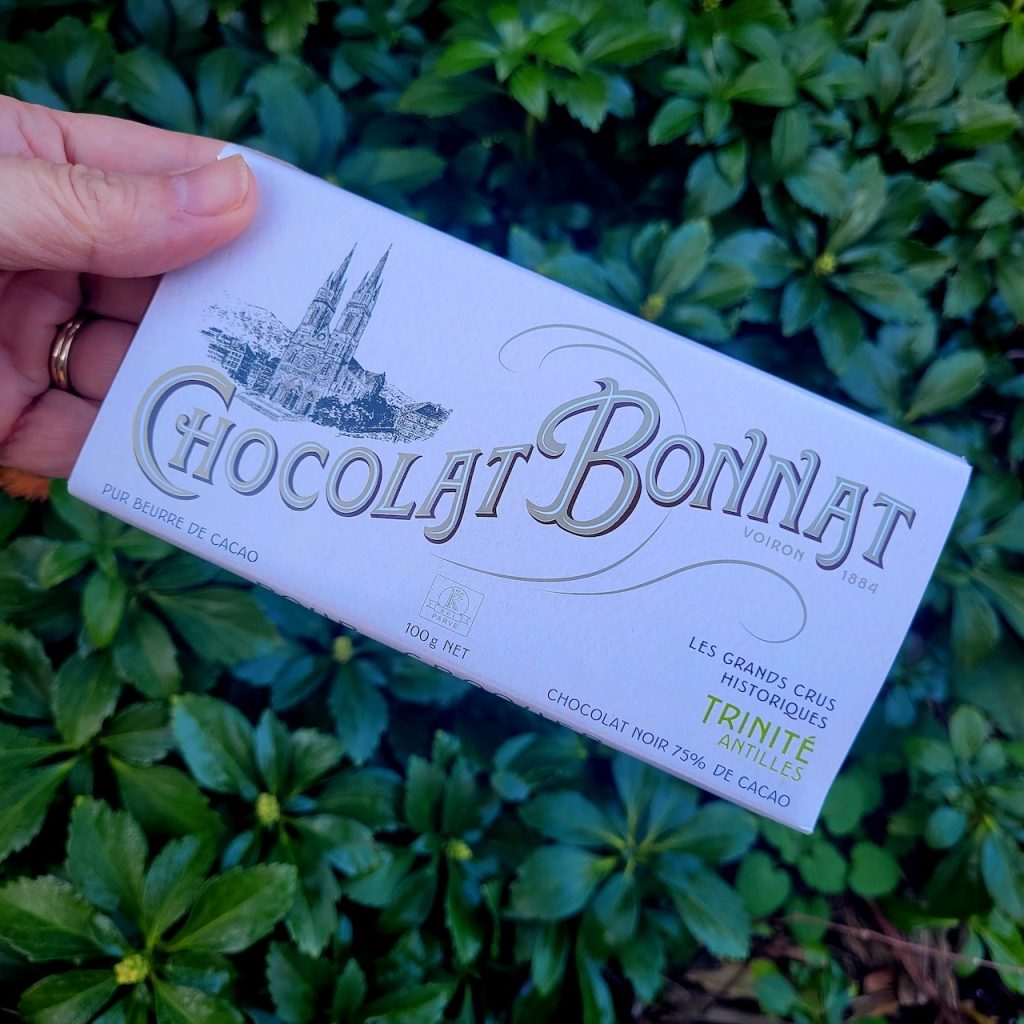
Backing up to Bonnat’s beginnings, it was in 1884—10 years before Martha Graham was born in Western Pennsylvania—that a young Frenchman by the name of Félix Bonnat opened his chocolate-making business in the small town of Voiron, situated about three-quarters of the way down the road from Lyon to Grenoble. At the time, the town had a population of roughly 11,000—while Paris already had a population of about 2,000,000. From the beginning, Bonnat has been a bean-to-bar chocolate maker. As the business has evolved—Stephane Bonnat, the fourth generation, runs the family operation today—it has retained its dedication to securing the most delicious cacao and creating single-origin bars. All are great, but this Trinidadian bar has been blowing my mind ever since it arrived at the start of this month.
While we have dozens of wonderful chocolate bars in the Candy Store that I can highly recommend from the heart, there is nothing on the shelves that tastes like this one! The cacao for this bar is from Trinidad—it’s all Trinitario cacao, one of the rarer and most flavorful varieties around. Cacao was first brought to Trinidad by European colonizers from Central and South America. While it did well for a while, in the early 18th century, a blight destroyed the majority of the original plantings of Criollo trees. The more commonly available Forastero cacao was then brought to the island to try to salvage the industry. Somewhere in the ensuing decades, Criollo trees cross-pollinated with Forastero, creating in the process a whole new cacao variety. Named for the island, Trinitario today is considered some of the most complexly flavored cacao in the world.
The Bonnat Trinité is one seriously stellar bar—unlike anything I’ve tried. Super clean and really layered, with a 75-percent dark cacao content, it kind of calls to mind a cacao-esque version of Danish modern design: clean lines, exceptional beauty, and a great deal of grace, in a way that brings both comfort and a compelling desire to consume more. I intended to nibble a few squares in order to write this piece, but I ended up eating almost the entire bar in one sitting.
Swing by the Candy Store soon and score one of these terrific Trinidadian bars. If your palate is at all like mine, you might well be back for more before too long!
P.S. The Bonnat Trinité dark chocolate is perfect with a fresh French Baguette from the Bakehouse—bread and chocolate being one of the world’s most wonderful food pairings!